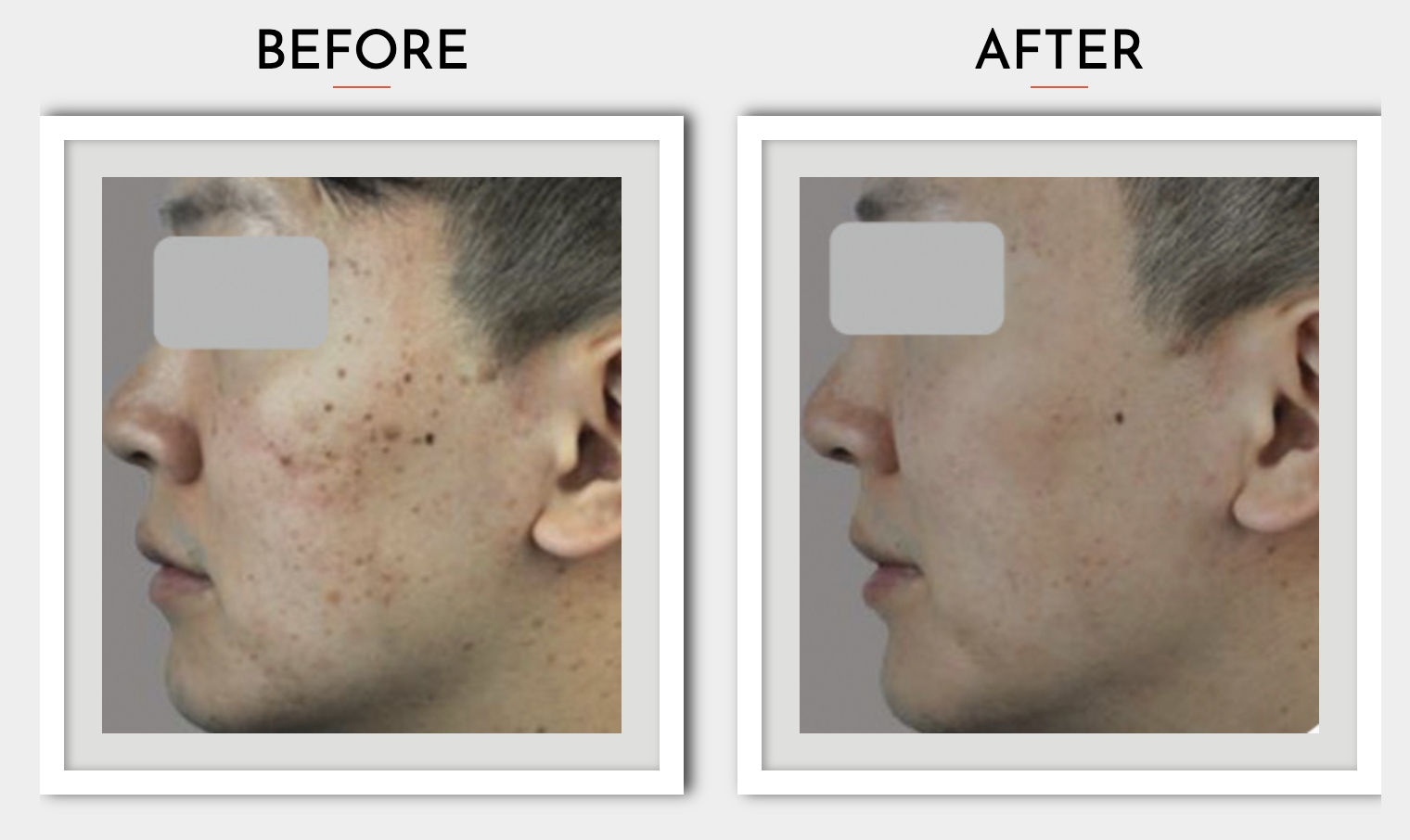
Is Fractional Laser the Best Way to Remove Acne Scars?
Quick answer: If you're dealing with pitted or uneven acne scars, fractional laser usually beats gentler options like peels alone, because it reaches the deeper layers of skin where those scars actually sit. Most people need one to three sessions, recovery runs about five to ten days, and the results tend to hold up longer than what milder treatments can offer. It isn't the right call for every skin type or every scar, but for plenty of people stuck cycling through weaker treatments, it's the step that finally works.
You tried the retinol. You tried the peels. Maybe you even did a round or two of microneedling and saw some improvement, just not enough to feel good without makeup on.
That gap between "a little better" and "actually happy with my skin" is where a lot of acne scar journeys stall out. People keep circling back to treatments gentle enough to feel safe but not strong enough to finish the job.
Fractional laser is built for that gap. It's more intense than a peel, more precise than full resurfacing, and it targets the scar tissue itself instead of just the surface. For anyone without a medical reason to avoid it, this is usually the treatment that should have come first, not the last resort tried after everything else stalled out.
What Fractional Laser Actually Does to Acne Scars
Acne scars, especially the atrophic kind (the pitted, sunken scars left behind after cystic acne), form because skin lost collagen during healing. No amount of surface exfoliation puts that collagen back.
Fractional laser works by creating thousands of microscopic injury columns in the skin, leaving the surrounding tissue untouched. Those tiny wounds trigger the body's natural healing response, which means new collagen production exactly where the scar tissue sits. The "fractional" part refers to the fact that only a fraction of the skin gets treated at once, and that's what keeps downtime so much shorter than older, fully ablative methods.
This is also why fractional laser outperforms treatments that only work on the surface. A chemical peel can improve texture and tone. It can't rebuild collagen three or four millimeters down, where a deep scar actually lives.
CO2 Laser Resurfacing vs Other Fractional Options
Not all fractional lasers are the same, and this is where a lot of research gets confusing fast.
CO2 laser resurfacing is the more aggressive, ablative option. It removes a thin layer of skin while also heating the deeper tissue, which makes it especially effective on deeper or more stubborn atrophic scars. Non-ablative fractional lasers heat tissue without removing the top layer, meaning less downtime but sometimes a slower, more gradual result.
Here's a simple way to compare the two:
| Factor | CO2 Fractional Laser | Non-Ablative Fractional Laser |
| --- | --- | --- |
| Best for | Deeper, more textured scarring | Mild to moderate scarring |
| Downtime | Longer, more visible peeling | Shorter, milder peeling |
| Sessions typically needed | Fewer, often 1-3 | Sometimes more |
| Sensation | More intense | Milder |
The right choice depends on scar depth, skin type, and how much downtime you can realistically handle. That's a conversation worth having directly with a provider, not something to guess from a chart.
What Treatment Actually Feels Like
A lot of hesitation around laser treatment comes from not knowing what to expect. So let's say it plainly.
During treatment, most people describe the sensation as similar to an elastic band snapping against the skin, repeated across the treatment area. It's not painless, but it's quick, and numbing options make it manageable for almost everyone.
Afterward, skin typically feels warm, almost like a mild sunburn. That warmth fades within a day or two. Over the days that follow, skin starts to peel slightly as it heals, and that peeling usually wraps up within five to ten days.
Most people need somewhere between one and three sessions, depending on how deep the scarring runs and how their skin responds. That's a realistic range, not a guarantee. It's worth asking a provider to look at your specific scarring before anyone commits to a number.
Why Fractional Laser Beats Starting Mild
The appeal of starting with a gentler treatment makes sense on paper. Lower cost, less downtime, lower risk. Right?
The problem is that mild treatments often underperform on moderate to deep atrophic scarring. People spend money and time on something that was never going to get them where they wanted to go. By the time they move on to fractional laser anyway, they've usually spent more in total than if they'd just started there.
That's the core argument worth stating plainly: for anyone without a medical contraindication, fractional laser should be the first serious option on the table, not the last resort after everything else fails. It saves money over the long run, and it saves the frustration of watching a scar barely budge after months of a weaker approach.
Clinical research backs this broader strategy too. A review of acne scar treatment approaches found that combining procedures like lasers with other therapies improved results compared to relying on a single mild approach, especially for scarring that's already had years to set in.
Where Microneedling Fits In
Microneedling for acne scars deserves a fair mention here, because it's not a bad treatment. It's just a different tool for a different job.
Microneedling uses fine needles to create controlled micro-injuries, stimulating collagen more gently than laser does. It tends to work well for very mild scarring, or as a complement to laser treatment rather than a replacement for it. Some providers combine the two for people with a mix of shallow and deep scarring.
Here's the honest comparison: microneedling usually asks for more sessions and more patience to reach a similar depth of result that fractional laser often hits faster. If time and the number of appointments matter to you, that's worth weighing.
Choosing Treatment Based on Scar Type, Not Just Headline Numbers
A lot of content online talks about acne scar treatment in broad strokes, quoting success rates without ever mentioning which scar type they apply to. That's where people get misled.
Atrophic scars (the ice pick, boxcar, and rolling types) respond well to fractional laser because the problem is depth and missing collagen. Hypertrophic or keloid scars, which sit raised above the skin, respond better to different approaches entirely. Discoloration left behind by old breakouts, without any real texture change, might not need laser at all.
The honest first step is getting your scar type actually assessed before picking a treatment path. A headline success rate means very little if it came from a study full of people with a different kind of scarring than yours. Ask your provider which scar subtype you have and whether that number even applies to you.
What Recovery Actually Looks Like Week by Week
Setting expectations around recovery helps you plan around work, school, or family events instead of getting blindsided mid-week.
The first one to two days bring warmth and mild redness, similar to sunburn. Days two through five usually bring visible peeling as the damaged outer layer sheds. By day five to ten, most people are back to a normal look, sometimes with a slight pink tone that fades over the following weeks.
That's shorter downtime than fully ablative treatments of the past, and it's part of why fractional laser has become the more practical option for people who can't disappear from daily life for two weeks straight.
Long-Term Maintenance Nobody Mentions
Here's a gap most guides skip entirely: what happens a year or two after treatment.
Fractional laser rebuilds collagen, but skin keeps aging and changing afterward like any other skin. Sun exposure, new breakouts, and natural collagen decline over time can all affect how long results hold. Keeping up with sun protection and a consistent skincare routine afterward protects the investment you made in treatment.
Some people do a single round of sessions and stay satisfied for years. Others come back periodically for touch-ups, especially if their scarring was more severe to start. Neither approach is wrong, but going in with realistic expectations about maintenance saves you from disappointment down the line.
Is Fractional Laser Right for You?
If you have moderate to deep atrophic scarring, already tried gentler treatments without getting the result you wanted, and don't have a medical reason to avoid it, fractional laser is worth a serious conversation with a provider.
If your scarring is very mild, or mostly discoloration rather than texture, a less intensive option might get you there without the extra downtime. And if you have a darker skin tone, the conversation should center on provider experience and the right laser settings for your skin, not just whether laser works in general.
- Fractional laser targets deeper scar tissue that surface treatments cannot reach
- Most people need one to three sessions, with recovery of five to ten days
- CO2 fractional lasers suit deeper scarring, non-ablative options suit milder cases
- Results vary by skin tone, and provider experience matters more than marketing claims
- Scar type should guide treatment choice more than general success-rate statistics
FAQ
How many fractional laser sessions do I need to remove acne scars?
Most people need between one and three sessions, depending on how deep the scarring runs and how their skin responds to treatment. A provider can give you a more specific estimate after looking at your scars directly.
Does fractional laser hurt?
Most people describe the sensation as similar to an elastic band snapping against the skin. It's uncomfortable but brief, and numbing cream typically makes it manageable.
How long is recovery after fractional laser treatment?
Skin usually feels warm like a mild sunburn right after treatment, followed by light peeling that resolves within five to ten days. Most people return to normal activities within that window.
Is fractional laser better than microneedling for acne scars?
Fractional laser generally works faster on moderate to deep scarring because it reaches deeper into the skin. Microneedling can still work well for milder scarring, or as a complementary treatment alongside laser.
Does fractional laser work the same for every skin tone?
No. Darker skin carries a higher risk of post-treatment pigment changes and may show less dramatic results even after multiple sessions. Choosing a provider experienced with a range of skin tones matters more than general success-rate claims.
Your Next Step
Acne scars rarely improve from waiting it out, and mild treatments can only do so much for scarring that goes deep. If you've already tried the gentler stuff and still see the texture every time you look in the mirror, a real assessment of your scar type and skin is the fastest way to find out whether fractional laser makes sense for you.
For more background on where acne comes from in the first place, Teen Acne: What to Know and What to Do is worth a read if you're dealing with a teenager's breakouts at home. And if facial treatments in general are new territory, How Often Should I Get a Facial? A Professional Guide to Healthy Skin covers how skin treatments fit into a broader routine.