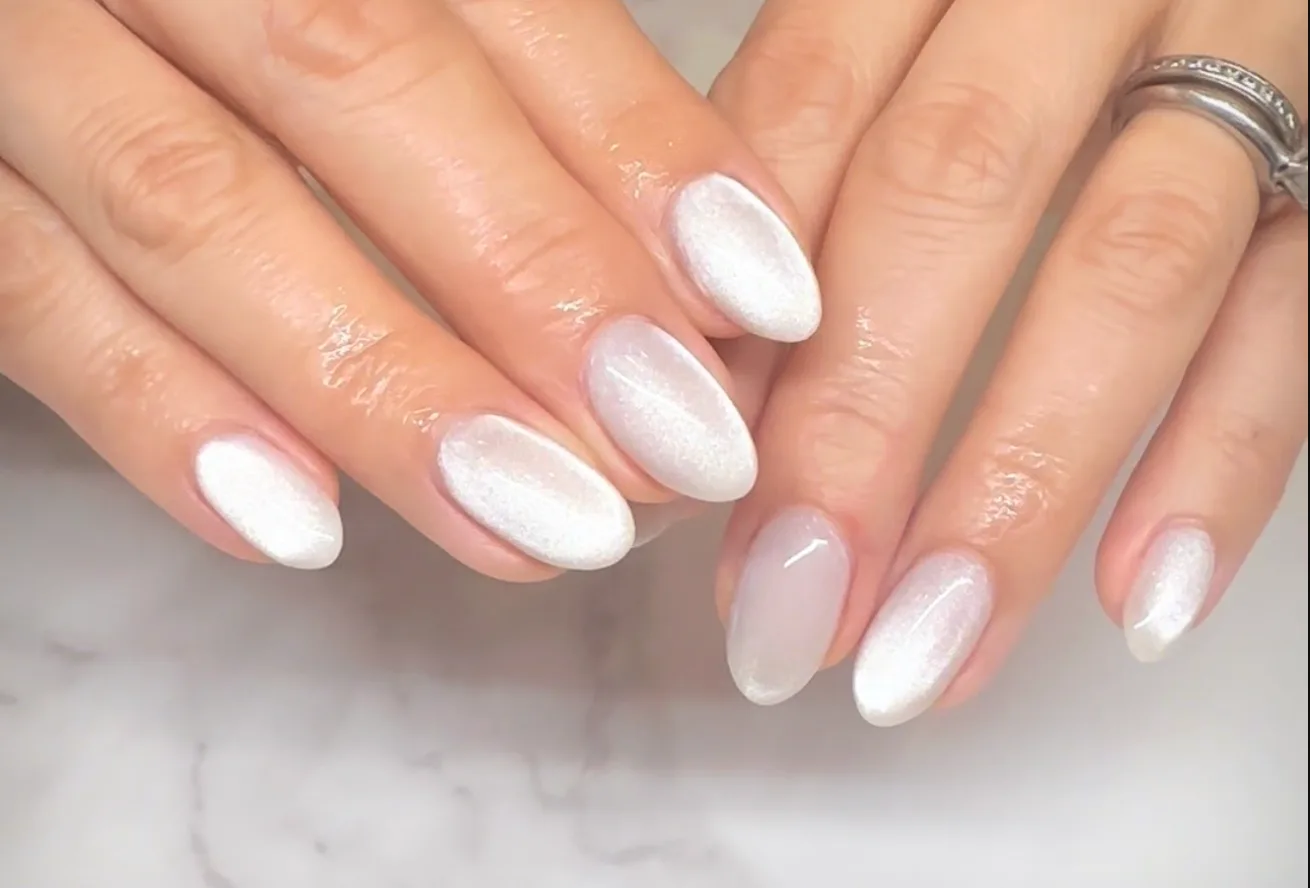
Why Do My Gel Nails Keep Lifting?
You leave your nail appointment with beautiful, fresh gel nails.
Then a few days later, you notice a tiny edge lifting.
You may be tempted to pick it.
Then another nail starts lifting.
Soon, you're wondering:
“Why does this keep happening to my gel nails?”
There isn't always one simple answer.
Gel lifting can happen because of improper nail preparation, incomplete cuticle work, incorrect product selection, curing problems, natural nail characteristics, or even the way you care for your nails at home.
At Timeless Salon & Spa, we believe the answer isn't simply to keep applying another set.
You need to understand why the lifting is happening in the first place.
1. Incomplete Nail Preparation
One of the most important parts of a successful gel service happens before the gel ever touches the nail.
Proper preparation creates the foundation for good adhesion.
And this is where cuticle work becomes extremely important.
Cuticle Work Is the Foundation
The gel needs to bond to the hard protein surface of the natural nail plate.
It does not bond properly to dead skin buildup.
The skin around the nail naturally sheds cells, moves, and produces oil.
If gel is applied over that buildup or onto the surrounding skin, the product can detach quickly.
That can create lifting and tiny gaps between the product and the natural nail.
Once lifting occurs, moisture can potentially get into those spaces and become trapped.
That's why proper cuticle work isn't an unnecessary add-on.
It is part of proper nail preparation.
2. The Natural Nail Plate Needs Proper Preparation
Cuticle work is only one part of preparation.
The natural nail plate also needs to be properly prepared so the gel system can adhere correctly.
If the nail plate isn't prepared adequately, the product may not bond as it should.
On the other hand, overly aggressive preparation can damage the natural nail.
Professional nail preparation is about finding the right balance.
Prepare the nail properly without compromising the natural nail underneath.
3. The Wrong Gel for Your Natural Nail
Not everyone's nails are the same.
Some natural nails are:
- Hard
- Soft
- Thin
- Flexible
- Strong
- More prone to bending
That means the same gel product isn't necessarily the best choice for everyone.
The flexibility of the product needs to match the flexibility of the natural nail.
For example, if a very rigid product is applied to a highly flexible natural nail, the natural nail can bend while the product stays rigid.
That difference in movement can cause the product to separate from the nail and eventually lift.
The right product needs to work with your natural nail—not against it.
4. Incorrect Curing Can Cause Lifting
This is one of the parts clients don't usually see.
Gel products contain chemicals called photoinitiators.
When exposed to the appropriate light, they start the reaction that changes the liquid gel into a solid.
But that reaction needs the right conditions.
The correct light wavelength, energy, exposure time, and compatible lamp all matter.
Professional gel systems commonly work within specific wavelength ranges, often around 365–405 nm, depending on the product and manufacturer's requirements.
Using an unsuitable or poor-quality curing lamp can result in improper curing.
And that can affect the performance of the gel.
Under-Cured Gel vs. Over-Cured Gel
Think about curing gel like baking.
You need the right temperature and the right amount of time for the perfect bake.
Too little isn't right.
Too much isn't right either.
Under-Cured Gel
Under-cured gel may feel dry or appear cured on the surface while the material underneath has not properly cured.
This can contribute to:
- Peeling
- Lifting
- Poor performance
- Potential skin sensitivity or allergic reactions from improperly cured product
This is why proper curing isn't something to guess at.
Over-Cured Gel
Over-curing can also affect the performance of the gel.
The material can become more brittle, potentially shrink, and lose some of the flexibility needed to work with the natural nail.
That can contribute to breaking and loss of adhesion.
Proper curing matters just as much as proper application.
5. Flooding the Cuticle
Another common problem is what nail professionals call flooding the cuticle.
This means the gel or polish spreads onto the surrounding skin or cuticle area instead of staying properly on the nail plate.
Remember:
Gel belongs on the nail—not on the skin.
Because skin moves and produces natural oils, product applied to it will not maintain the same adhesion as product properly bonded to the nail plate.
That can create an early lifting point.
Precise application around the cuticle area is therefore an important part of a long-lasting gel service.
6. Natural Oils and Sweat Can Affect Adhesion
Sometimes the natural characteristics of your nails can also play a role.
Some people naturally have more oil or moisture on their nail plate.
Sweating and environmental conditions can also affect the service.
This is another reason why proper professional preparation and choosing the right gel system matter.
A professional needs to look at the actual condition of your nails rather than simply applying the same products and process to everyone.
7. Your Homecare Matters
Even when your gel service has been done properly, what you do at home can make a big difference.
Your nails are not tools.
They're jewellery.
Don't use them to:
- Scrape things
- Pick at labels
- Open containers
- Pry things apart
- Remove stuck objects
If you use your nails as tools, you're putting stress on both the product and your natural nail.
Protect Your Hands
Wear gloves when cleaning or doing dishes.
Try to avoid prolonged exposure to very hot water.
And make cuticle oil part of your daily routine.
Regular cuticle oil helps keep the nail area and surrounding skin conditioned and hydrated.
Small daily habits can help protect the investment you made in your manicure.
What Should You Do If Your Gel Starts Lifting?
This is extremely important:
Don't peel it off.
Don't pick it.
Don't rip it off yourself.
When you pull or peel gel away from the nail, you may take layers of your natural nail with it.
That can leave the natural nail thinner and weaker.
Instead, come see a professional as soon as possible.
A professional can assess the lifting and determine what is causing it, then safely remove or repair the product as appropriate.
Don't turn a small lifting issue into natural nail damage.
The Goal Isn't Just to Make Gel Last
At Timeless, we don't believe a successful gel manicure is simply one that looks beautiful when you leave the salon.
We want your natural nails underneath to remain healthy.
That means paying attention to:
Preparation.
Cuticle work.
Product selection.
Application.
Curing.
Aftercare.
Every part of the process matters.
Why Proper Cuticle Work Matters So Much
We strongly believe that cuticle work should be part of every proper nail service.
It shouldn't be something a client has to request as an extra option.
If the service is being properly performed, the nail needs to be properly prepared.
Good cuticle work should also be gentle and precise—not painful.
The goal is to remove the dead skin buildup from the nail plate, not aggressively cut or damage living tissue around the nail.
Think of cuticle work like the foundation of a house.
You wouldn't build a beautiful house on an unstable foundation and expect it to last.
The same principle applies to your nails.
Good preparation creates the foundation for a better manicure.
A Long-Lasting Manicure Starts Before the Polish
When gel nails repeatedly lift, it's easy to blame the gel.
But there can be many reasons behind the problem.
The natural nail.
The preparation.
The cuticle work.
The product.
The application.
The curing system.
Your homecare.
Even your daily habits.
That's why we don't believe in simply saying:
“Let's put another set on.”
We want to understand what happened and correct the underlying issue.
The Timeless Approach
At Timeless Salon & Spa, our goal is not simply to make your nails look good for a few days.
We want you to have a beautiful manicure while maintaining the health and integrity of your natural nails underneath.
That starts with proper preparation.
It continues with choosing the right product for your individual nail.
It requires proper application and curing.
And it continues with your homecare.
We take the time to do the service properly because your nails are worth that care.
The Bottom Line
If your gel nails keep lifting, don't assume that gel simply “doesn't work for you.”
There may be a specific reason.
It could be incomplete preparation.
Improper cuticle work.
The wrong gel for your natural nail.
Incorrect curing.
Product touching the skin.
Natural oils or moisture.
Or how you are treating your nails at home.
The solution is not to keep repeating the same service and hoping for a different result.
Find the cause.
Correct the problem.
Protect the natural nail.
And remember:
Your nails are jewellery, not tools.
Take care of them like an investment.
Because at Timeless, we don't just care about how your nails look when you leave.
We care about the health of the natural nail underneath and how you feel while you're with us.