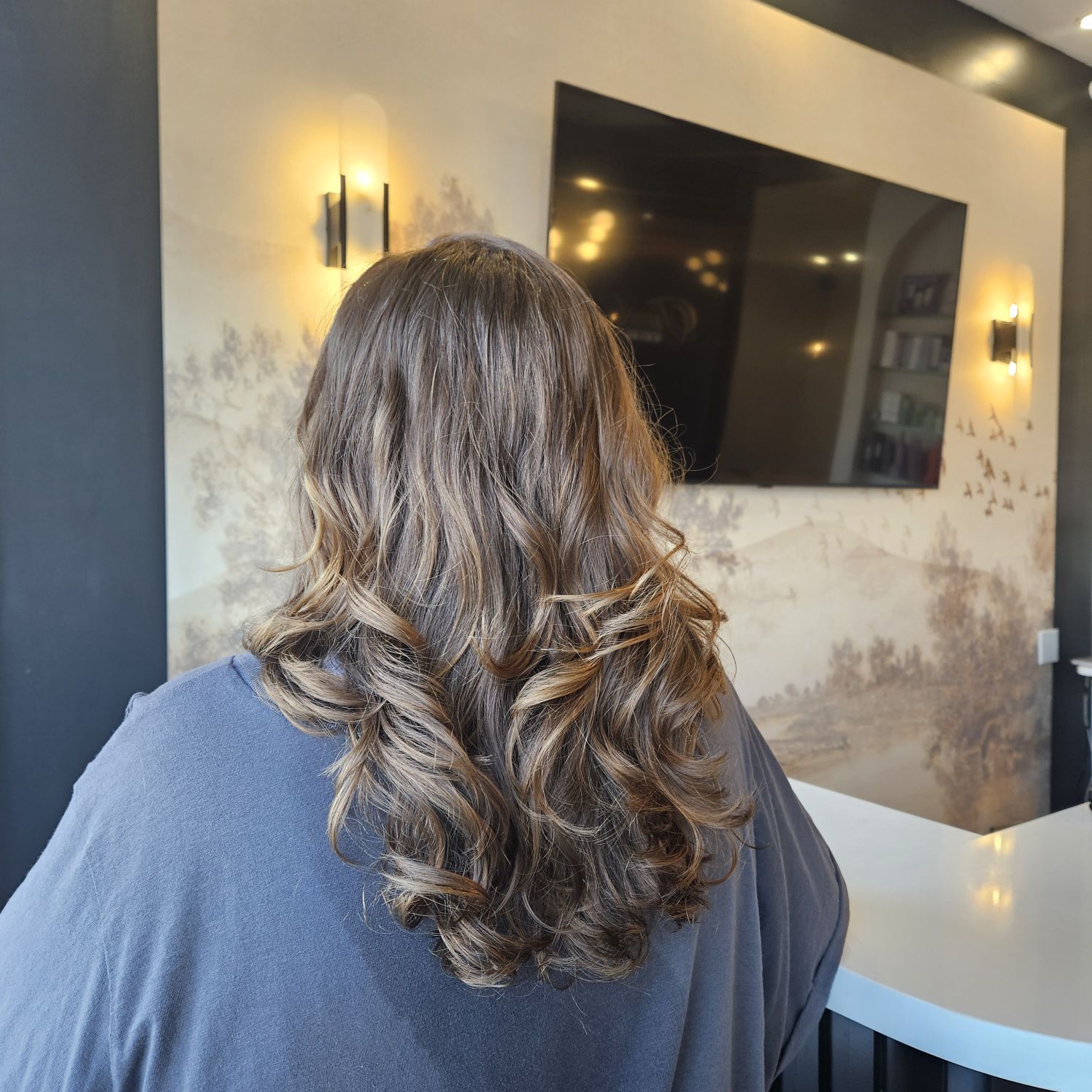
What Is a Digital Perm, and How Does It Work?
A digital perm uses heat rods with digitally controlled temperature, combined with perm solution, to create soft, natural-looking waves and volume. Unlike a traditional cold perm, which relies on chemical solution alone, the added heat gives digital perms a looser curl pattern that behaves more like natural wavy hair. It works best on virgin hair, and it's not recommended if your hair has already been through color, highlights, or another chemical process.
You've probably seen the term all over your stylist's Instagram lately: soft, bouncy waves that look expensive and effortless at the same time. That's usually a digital perm, and it's not the same chemical process your mom got in the 90s.
What Is a Digital Perm, Exactly
A digital perm is a hairstyling technique that uses hot rods, with the heat regulated by a machine with a digital display, which is where the name comes from. Hairstylists often just call it a "hot perm." The process pairs that controlled heat with a standard perm solution, and that combination is what sets it apart from the perm you might remember from decades ago. The technique and its name trace back to a trademark held by Japanese company Paimore Co. (Wikipedia).
If you've only ever heard "perm" used as one catch-all word, this distinction matters more than it sounds. A cold perm skips the heat step entirely and depends on the chemical solution to reshape the hair structure on its own. A digital perm adds a heat source into that equation, and that's the whole reason the curl comes out looking different.
Before: Why Cold Perms Left a Lot to Be Desired
If you've had a cold perm before, you know the drill. The solution goes on, the rods go in, and you wait for the chemicals alone to do the reshaping work. What you get is often a tighter, more uniform curl pattern that can read as "permed" rather than naturally wavy.
That tighter curl isn't a flaw exactly. Some people want that look. But if your goal was soft movement and body rather than defined ringlets, a cold perm could leave you overcorrected. You'd walk out with curl where you wanted wave, and that gap between expectation and result is a big part of why perms got a bad reputation for a while.
After: What Changes With a Digital Perm
A digital perm uses heat rods with digital temperature control plus perm solution, and that combination produces soft, natural waves along with volume and definition that a cold perm typically doesn't give you. The heat changes how the hair responds to the solution, which is why the resulting curl pattern looks looser and more like texture you'd get from a curling iron than from a chemical treatment.
That's the appeal for a lot of clients right now, especially with the Korean digital perm look trending heavily into 2026. The style leans into movement and shine rather than tight spirals, and the digital heat process is the mechanical reason that look is achievable in the first place.
The Bridge: Why Heat Changes the Outcome
Here's the part most salon blogs gloss over. The heat doesn't replace the chemistry. It works alongside it. You're still processing hair with a perm solution, and that solution is still doing the job of breaking and reforming the bonds inside each strand. The digital heat rods just change how that chemical reaction behaves on the hair, which is what produces the looser, more natural-looking result.
That's worth sitting with for a second, because digital perms get marketed as the gentle, low-damage alternative to old-school perms. That framing isn't entirely honest. You're combining heat and chemical processing in the same service, not swapping one for the other. If anything, that's two forms of stress on the hair shaft happening at once, not one being removed.
Digital Perm vs Cold Perm: The Real Differences
| Factor | Digital Perm | Cold Perm |
| --- | --- | --- |
| Heat used | Yes, digitally controlled rods | No, room temperature |
| Curl result | Soft, natural waves, more volume | Tighter, more defined curl |
| Best suited for | Virgin, thick, coarse hair | Various hair types, including some already processed hair |
| Hair condition required | Virgin hair, no prior chemical treatment | More forgiving of hair history, though still a chemical process |
| Styling vibe | Loose, lived-in texture | Classic curl pattern |
Neither one is objectively better in every case. The right choice depends on the curl pattern you actually want and, just as important, on what your hair has already been through.
Who a Digital Perm Actually Works Best On
This is where the marketing often skips the fine print. A digital perm gives the best result on virgin, thick, coarse hair. That's not a minor detail. It's the main condition that determines whether you'll be happy with the outcome.
If your hair already has chemical treatment on it, meaning a prior cold perm, highlights, or chemical straightening, a digital perm is not the move. Processed hair has already had its internal structure altered once. Running it through another heat-plus-chemical process raises the risk of breakage, uneven curl take, and damage that's hard to reverse. Virgin hair holds up to the combined heat and chemical process in a way that already-treated hair generally can't.
If your hair is dry or breaking even before you consider a perm, it's worth sorting that out first. This piece on why hair gets dry and frizzy even with conditioner is a good place to start if that sounds like you.
Does a Digital Perm Work on Short Hair
Yes, and it's actually one of the more popular lengths for the style right now. Short hair takes the digital perm curl pattern well because the rods can create consistent wave movement without the weight of longer hair pulling the curl out over time. If you're working with a bob or lob, the soft wave look tends to hold its shape for longer stretches between styling.
Longer hair can still work beautifully too, but gravity is more of a factor, and the wave pattern may loosen faster simply due to the added weight pulling down the strand.
Digital Perm Aftercare, Realistically
Because this is still a chemical and heat process, your hair needs real aftercare, not just a nice-smelling shampoo. A few things matter most:
- Skip washing for the first 24 to 48 hours so the curl pattern has time to set fully.
- Use sulfate-free shampoo and a moisture-focused conditioner, since the hair shaft has just been through a heavy process.
- Avoid brushing wet curls. Finger-detangle instead to protect the shape.
- Add a leave-in treatment or hair mask weekly, since processed hair loses moisture faster than virgin hair.
- Limit additional heat styling for the first few weeks to avoid compounding stress on hair that's already been through heat once.
None of that is unique to digital perms exactly, but it's more important here because of how much the hair has gone through in a single appointment. If dryness is already a recurring issue for you outside of perming, it's worth reading about why hair stays dry and frizzy even with regular conditioner before you commit to any chemical service.
So Is a Digital Perm Worth It
For most people chasing soft, natural waves and extra volume, yes, a digital perm is genuinely the better choice over a cold perm. The heat-plus-solution combination gives you a curl pattern that looks more like texture and less like "I just got a perm," and that's exactly what a lot of current digital perm styles are going for heading into 2026.
The catch is the one condition that gets buried under all the trend talk: this only works well on virgin hair. If you've colored, highlighted, or chemically straightened your hair recently, that's not a small footnote. It's the difference between loose, healthy-looking waves and hair that can't handle a second round of chemical processing. Be honest with yourself and your stylist about your hair's history before you book.
- A digital perm uses digitally controlled heat rods plus perm solution to create soft, natural waves and added volume.
- A cold perm relies on chemical solution alone, which usually produces a tighter, more defined curl.
- Digital perms work best on virgin, thick, coarse hair, not on hair that's already been colored, permed, or chemically straightened.
- Short hair holds the digital perm wave pattern especially well.
- It's still a chemical process combined with heat, so it is not automatically gentler than a traditional perm, and aftercare matters just as much.
FAQ
What is a digital perm?
A digital perm is a hairstyling technique that uses heat rods with digitally regulated temperature, combined with perm solution, to create soft, natural-looking waves and volume. It's often called a "hot perm" by stylists, and the name comes from the digital display used to control rod temperature.
What's the difference between a digital perm and a cold perm?
A digital perm uses heat alongside perm solution, which produces a looser, more natural wave pattern. A cold perm relies on chemical solution alone without heat, which typically creates a tighter, more uniform curl.
Can you get a digital perm on hair that's already colored or permed?
It's not recommended. Digital perms give the best results on virgin hair that hasn't been through prior chemical treatment, including previous perms, highlights, or chemical straightening. Processing already-treated hair again raises the risk of breakage and uneven curl results.
Is a digital perm good for short hair?
Yes. Short hair tends to hold the digital perm's soft wave pattern well, since there's less weight pulling the curl straight over time, which is part of why the style is popular on bobs and lob cuts.
Is a digital perm actually less damaging than a traditional perm?
Not necessarily. A digital perm still uses chemical perm solution, and it adds heat on top of that. That combination means it isn't automatically gentler than a cold perm. It's a different process with its own set of demands on healthy, unprocessed hair.
Thinking About Booking a Digital Perm
If your hair is virgin, thick, and you're after soft waves instead of tight curls, a digital perm is worth a real conversation with your stylist. Bring your hair's full chemical history to that appointment, since that one detail decides whether this process is going to give you the result you want or work against you.