Dry, Cracked Heels Are More Than a Cosmetic Problem
Dry, rough, cracked heels are something many people simply ignore.
Then summer comes.
The sandals come out.
And suddenly, those dry heels become a problem.
The first reaction is often to grab a razor, cheese grater, pumice stone, or whatever tool is available and start scraping.
The more skin you remove, the smoother your feet feel.
At least temporarily.
But smooth for a few days is not the same as healthy, properly cared-for skin.
At Timeless Salon & Spa, we believe the goal is not to remove every bit of thick skin from your feet.
The goal is to remove the dead skin that needs to be removed, exfoliate appropriately, hydrate the skin, and address what is causing the problem.
Why Do Your Heels Become Dry and Cracked?
There is no single reason for cracked heels.
Several factors can contribute to dry, rough, or cracked skin, including:
- Lack of moisture
- Wearing certain types of footwear
- Standing for long periods
- Pressure on the feet
- Walking barefoot
- Not properly removing dead skin
- Athlete's foot
- Certain health conditions
- Simply ignoring foot health for too long
Your feet carry you every day.
They deserve the same attention you give the rest of your body.
Your Feet Have the Thickest Skin for a Reason
The skin on the soles of your feet is naturally much thicker than the skin on many other parts of your body.
And there is a reason for that.
Your feet carry your entire body weight.
Some thick skin and callus are completely normal.
In fact, callus can provide protection in areas that experience repeated pressure and friction.
So the goal should not be:
“I want every bit of callus gone.”
The better goal is:
“I want my feet to be smooth, comfortable, exfoliated, and hydrated.”
Healthy feet do not have to look completely free of natural skin thickness.
They need the right balance.
The Biggest Mistake: Aggressively Scraping Your Heels
This is where we often see people go too far.
A razor or cheese grater can make the heel feel incredibly smooth because you are physically removing a large amount of skin.
But more removal does not automatically mean better foot care.
Cheese graters are for cheese, not skin.
Aggressive scraping can remove more than the dry dead skin you actually need to address.
And when you repeatedly attack the skin, you may create irritation or damage instead of improving the condition of your feet.
The goal is controlled exfoliation.
Not a battle with your heels.
At Timeless, We Remove Only What Needs to Be Removed
Our approach is different.
We carefully remove and exfoliate the dead skin.
We do not believe in aggressively scraping the feet just to make them feel temporarily smooth.
Depending on the condition of the feet, we can use professional tools such as an e-file and professional foot files, along with professional foot-care products designed specifically for the skin of the feet.
Because foot skin is different.
It is thick.
It experiences pressure.
It experiences friction.
And it needs products and techniques designed for that environment.
The goal is to improve the condition of the skin, not simply remove as much as possible.
Hydration Is Just as Important as Exfoliation
Removing dead skin is only part of the solution.
You also need to give the skin what it needs afterward.
Think of it this way:
Exfoliation removes the buildup. Hydration helps maintain the skin.
If you keep removing dry skin but never properly address the dryness, the roughness can return.
That is why we look at both sides of foot care.
Exfoliate appropriately.
Hydrate consistently.
Maintain the results at home.
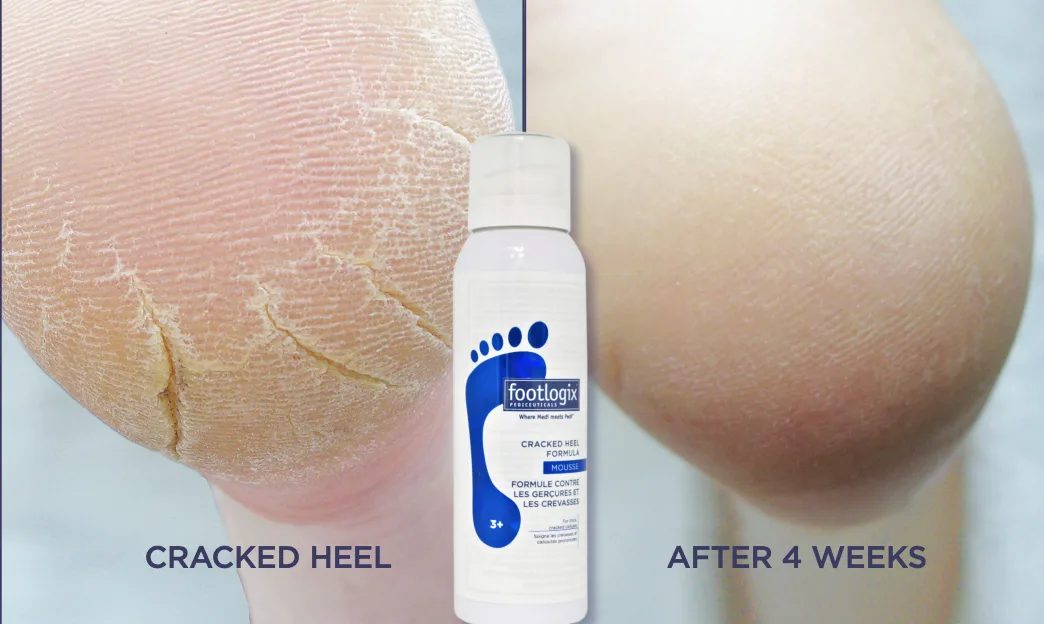
Why We Recommend Footlogix Cracked Heel Formula
For clients dealing with thick, callused, or cracked skin, one of our recommended home-care products is the Footlogix Cracked Heel Formula with Dermal Infusion Technology®.
It is specifically formulated for dry, thick, callused, and cracked foot skin.
It contains Evening Primrose oil, which helps improve the condition of cracked skin, and Urea, which helps hydrate and lock moisture into the skin.
One of the things we particularly like about the formula is its non-occlusive mousse texture.
It absorbs quickly and does not leave the greasy residue that you often get from very heavy creams or oils.
What About Vaseline, Oil, or Homemade Remedies?
A common home remedy is to put a very thick layer of cream, Vaseline, or oil on the feet and then put socks on overnight.
It may make the feet feel softer temporarily.
But there is a difference between making the surface feel soft and actually choosing a product designed to address the needs of thick foot skin.
Heavy products can sit on top of the skin.
A specialized foot-care product is formulated specifically for the condition of the skin you are trying to improve.
That is why product selection matters.
Your feet deserve more than whatever body cream happens to be sitting in your bathroom.
Don't Expect One Treatment to Fix Years of Neglect
This is another important point.
If you have ignored your feet for months or years, one pedicure may make a noticeable difference.
But maintaining that improvement requires consistency.
Your feet are exposed to pressure and friction every day.
You walk.
You stand.
You wear shoes.
You go barefoot.
Your skin continues to change.
So professional foot care should not be viewed as a one-time rescue.
It should be part of your regular self-care routine.
Just like taking care of your skin, your hair, or your overall health.
When Should You See a Professional?
Here is a simple rule:
If what you are doing at home is not fixing the issue—or the results only last temporarily—it may be time to get professional help.
A professional can look at the condition of your feet and determine what type of care is appropriate.
Sometimes the issue is simply dryness and buildup.
Sometimes there are other factors involved.
And sometimes what looks like ordinary dry skin may actually need medical attention.
If you have a health condition such as diabetes, or you notice significant cracks, bleeding, pain, redness, swelling, or signs of infection, it is important to seek appropriate medical advice rather than trying to aggressively treat the area yourself.
Your Home Routine Matters
A professional pedicure can improve the condition of your feet.
But what you do between appointments matters too.
Make foot care a habit.
Keep your feet moisturized.
Use a foot-care product appropriate for your skin.
Avoid aggressively scraping your heels.
Pay attention when your skin starts becoming rough or cracked instead of waiting until the problem becomes severe.
And if you repeatedly struggle with the same issue, ask a professional for guidance.
The goal is not to constantly remove more skin.
The goal is to keep your feet healthy and maintained.
You Don't Need Perfectly Bare Feet. You Need Healthy Feet.
There is nothing wrong with having some natural callus.
There is nothing wrong with having thicker skin on your soles.
Your feet are designed that way for a reason.
The problem is when the skin becomes excessively dry, rough, uncomfortable, or cracked and you simply keep covering it up instead of addressing it.
Healthy foot care is about balance.
Remove the dead skin.
Do not over-scrape.
Exfoliate properly.
Hydrate the skin.
Use the right products.
Maintain the results.
And most importantly, understand your feet instead of fighting them.
At Timeless, We Look at the Health of Your Feet
A pedicure should be more than applying polish to your toenails.
Your feet deserve attention too.
At Timeless Salon & Spa, we take the time to look at the condition of your feet and use professional techniques and products to help improve their appearance and condition.
We are not interested in simply making your heels feel smooth for a few days.
We want to help you create healthier, smoother, better-maintained feet over time.
Because beautiful feet are not about removing every bit of natural skin.
They are about healthy skin that is properly exfoliated, hydrated, and cared for.
The Bottom Line
If your heels are dry and cracked, don't immediately reach for the most aggressive tool you can find.
A cheese grater may work beautifully in the kitchen.
It does not belong on your heels.
Start by understanding why your skin is dry.
Remove dead skin appropriately.
Hydrate consistently.
Use the right foot-care products.
And when home care is not solving the problem, get professional help.
Your feet carry you every day.
Take care of them like they matter—because they do.
Frequently Asked Questions About Dry, Cracked Heels
What is the best way to fix cracked heels?
The best approach depends on why your heels are cracked, but generally involves appropriate exfoliation of dead skin, consistent hydration, and addressing factors such as footwear, pressure, dryness, or other underlying concerns.
Is it okay to use a cheese grater on cracked heels?
We do not recommend aggressive scraping with a cheese grater or razor. Removing too much skin can irritate or damage the skin. Professional exfoliation focuses on removing appropriate dead skin while protecting healthy tissue.
Should I remove all the callus from my feet?
No. Some callus and thicker skin are normal and can help protect areas exposed to pressure and friction. The goal is to keep the skin smooth, comfortable, exfoliated, and hydrated—not necessarily to remove every bit of natural thickness.
What should I put on cracked heels?
A specialized foot-care product can be a better choice than simply using a heavy body cream or oil. At Timeless, we recommend Footlogix Cracked Heel Formula for appropriate clients because it is specifically designed for thick, callused, cracked foot skin.
How often should I moisturize my feet?
Consistency is more important than occasionally applying a large amount of product. Follow the product directions and make moisturizing part of your regular foot-care routine.
Why do my heels become dry again after I scrape them?
Aggressive scraping may make the skin feel smooth temporarily, but it does not necessarily address the reason the skin became dry or cracked in the first place. Continued pressure, friction, lack of moisture, footwear, and other factors can cause roughness to return.
Can a pedicure help with cracked heels?
A professional pedicure can help remove appropriate dead skin, improve hydration, and establish a maintenance plan. The best results also depend on consistent home care between appointments.
When should I see a professional about cracked heels?
If your home routine is not improving the problem or only provides temporary results, consider professional foot care. If you have severe cracks, bleeding, pain, redness, swelling, signs of infection, or a health condition that affects your feet, seek appropriate medical advice.
Can cracked heels be prevented?
Regular foot care can help maintain smoother skin. Consistent hydration, appropriate exfoliation, suitable footwear, and paying attention to changes in your feet can all be part of a healthy foot-care routine.