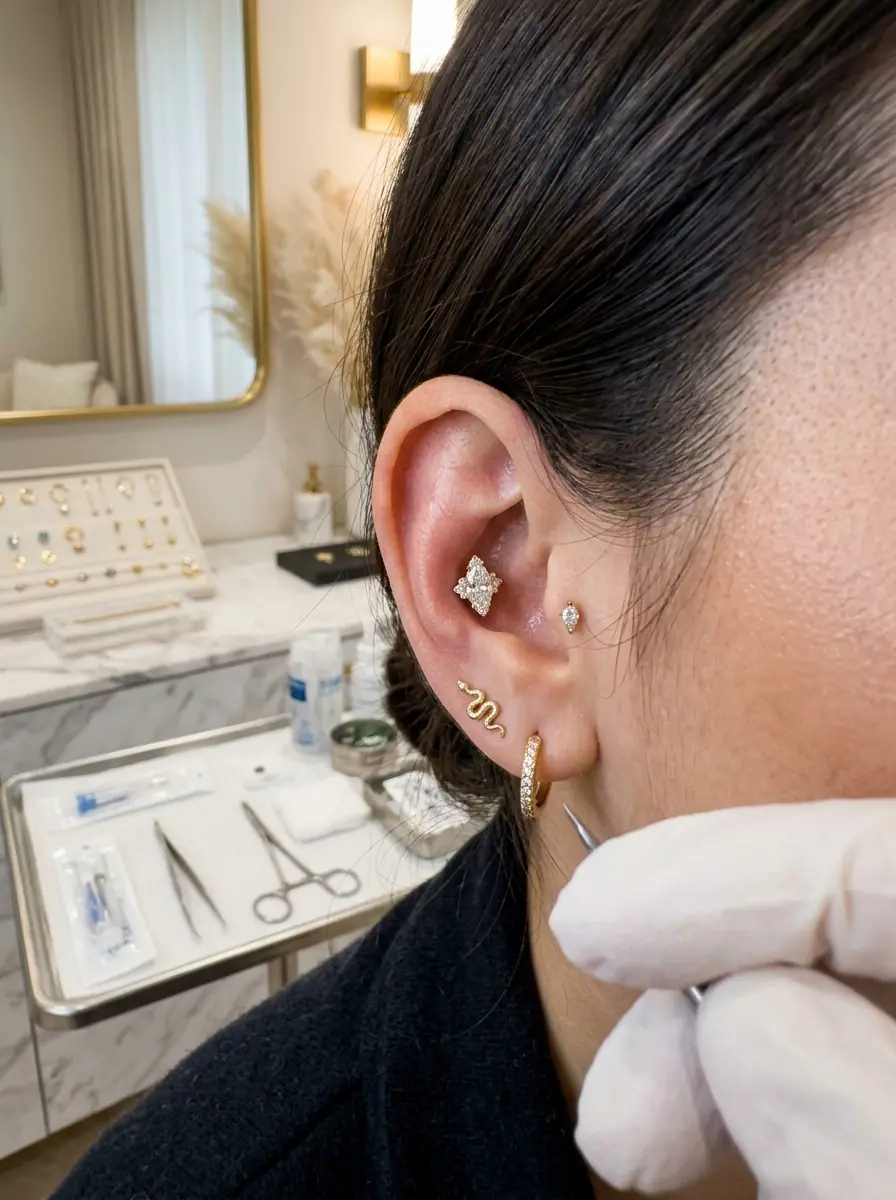
Quick Answer: Before you book, ask what device the studio uses, whether the jewelry touches anyone's hands before it touches the ear, what training and inspection the piercer has passed, what aftercare support comes with the appointment, and what happens if something goes wrong. The device matters as much as the studio, since older spring-loaded guns use a thick, blunt post that can bruise and tear tissue, while modern hand-pressed systems use a thin, sharp, sterile post closer to a needle.
Most people pick a piercing spot the way they pick a nail salon. Convenient location, decent reviews, maybe a walk-in special. That works fine for a lot of beauty services, but ear piercing puts a piece of metal through living tissue, and the tool doing that job is not a detail you should skip past.
Why the Piercing Device Matters More Than People Think
Spring-loaded piercing guns have been the default at mall kiosks for decades, mostly because they're fast and familiar. The mechanism uses a thick, blunt post and spring force to drive jewelry through the ear. That design does not cut a clean hole. It forces tissue apart the way a blunt object pushes through anything, which causes trauma and prolongs healing.
A hand-pressed system like Pro-Pierce works differently. It uses hand pressure and an ultra-thin, sharp piercing post that pierces the ear more like a needle than a battering ram. The hole it leaves is smaller, cleaner, and closer to what your body expects to heal from.
This is not just a comfort preference. Public Health Ontario's review of infection prevention and control risks notes that hand-pressure devices commonly use single-use sterile cartridges, so every part of the system that touches the client is sterile. Older spring-loaded guns carry contamination risk baked into their reusable parts, since you cannot fully sterilize a spring mechanism between clients the way you can swap a cartridge.
The Contamination Problem Nobody Mentions at the Mall Kiosk
Here's where it gets specific. The Association of Professional Piercers has documented a known failure mode with spring-loaded guns: sometimes the pressure and speed of the spring is not enough to force the blunt jewelry all the way through the flesh, and the stud gets stuck partway through the ear. The operator then has two bad options, neither of which involves a sterile environment built for that moment.
A hand-pressed system sidesteps this because of how the jewelry is handled. Pro-Pierce is a no-touch system, meaning the earring only makes contact with the client as it passes through the ear. Compare that to gun-style methods where jewelry has to be hand-loaded onto the device, which adds a point of cross-contamination every single time.
Public Health Ontario's literature review also found no evidence that injury risk, including cartilage injury, differs between hand-pressure devices and guns specifically. That's worth saying plainly, because it means the strongest argument against guns isn't about injury rates. It's about sterilization design and the inability to fully clean reusable parts between uses, which is also why professional piercers tend to avoid gun-style tools regardless of where the injury debate lands.
What that design difference does allow is safer, more comfortable piercing in places a gun was never built for well. Cartilage and nose piercings need a tool that can place a precise, thin post without crushing the thicker tissue around it, and a thin needle-style post is simply a better match for that job than a thick, blunt one.
Questions to Ask Before Ear Piercing: Start With the Device
Question 1: What Device Do You Actually Use?
Ask this first, before price, before appointment times. A studio that can tell you plainly whether they use a hand-pressed cartridge system or a spring-loaded gun, and can explain why, is a studio that has thought about this. One that gets vague or annoyed by the question is telling you something too.
Question 2: Does the Jewelry Touch Anyone's Hands Before It Touches My Ear?
This is the no-touch question. In a sterile cartridge system, the earring stays sealed until it passes through the ear. If jewelry has to be hand-loaded onto a gun before use, ask how that step is sanitized and how often.
Question 3: Is the Piercer Trained and Inspected?
In Ontario, piercers are required to complete training and pass inspection from their local health authority before they can legally operate. In our region, that's Halton Region. Training and inspection are the baseline for operating legally, not proof of a great experience. Ask how long the piercer has been doing this and how they handle piercings on kids specifically, since a nervous eight-year-old needs a different approach than an adult getting a second lobe piercing.
Question 4: What Aftercare Comes With the Piercing?
A good studio does not hand you a stud and a wave goodbye. At Timeless Salon & Spa, every piercing appointment includes a pre-appointment consent form with before and after instructions, detailed aftercare instructions sent home with the client, and an aftercare solution included with the service. Ask whether the studio follows up with you to confirm healing is on track, and whether they'll help if jewelry needs to be removed or exchanged once healing is done.
Question 5: What Happens If Something Goes Wrong?
Every piercing carries some risk of irritation, bumps, or slow healing, regardless of device. What separates a studio worth trusting is whether they have a plan for it. We call our clients after their appointment to confirm they followed the aftercare instructions and that everything is healing well, and we offer a complimentary service after healing to remove or exchange earrings if needed. Ask any studio you're considering what their version of that follow-through looks like.
Our Take at Timeless Salon & Spa
Training and inspection get a piercer in the door legally. They are not the finish line. What actually separates a studio is experience and whether the staff genuinely care about making every client, especially a nervous kid getting their first piercing, feel safe and comfortable through the whole process.
We built our process around that idea, not just the device. We use the Pro-Pierce hand-pressed system because the sterile, single-use design and the thin, sharp post match what we believe about doing this job responsibly. But the consent forms, the aftercare calls, and the free follow-up service exist because a safe device is only half the job. The other half is making sure you trust the hands doing it.
Do your own research before you book anywhere, including with us. Ask the five questions above. A studio with nothing to hide will answer them without hesitation.
Key Takeaways
- Spring-loaded guns use a thick, blunt post and spring force that causes tissue trauma and prolongs healing, especially on cartilage.
- Hand-pressed systems like Pro-Pierce use a thin, sharp post and sterile single-use cartridges, which removes the contamination risk tied to reusable gun parts.
- A no-touch jewelry system means the earring only contacts you, not a technician's hands, reducing cross-contamination.
- Ontario piercers must pass training and local health inspection to legally operate, but that's a baseline, not a guarantee of quality care.
- Aftercare support, including follow-up and help with jewelry removal, matters as much as the piercing itself.
FAQ
Is a piercing gun actually more dangerous than a hand-pressed device?
The main documented risk with spring-loaded guns comes from their design: reusable parts that cannot be fully sterilized between clients, and a blunt post that causes more tissue trauma than a thin, sharp needle-style post. Public Health Ontario's literature review found no direct evidence that injury risk, including cartilage injury, differs between the two device types, but the contamination and tissue-damage concerns are well documented.
Can cartilage piercings be done safely with a hand-pressed device?
Yes. The thin, sharp post and sterile cartridge design of systems like Pro-Pierce allow for safe, comfortable cartilage and nose piercings without the tissue damage associated with gun-style methods on thicker cartilage tissue.
What questions should I ask before booking an ear piercing for my child?
Ask what device the studio uses, whether the piercer is trained and inspected by the local health authority, how they handle nervous or first-time child clients, and what aftercare support is included. A studio that answers all of these clearly and patiently is a good sign.
Do all piercing studios in Ontario have to meet the same safety standards?
Piercers in Ontario must complete training and pass inspection from their regional health authority, such as Halton Region, to operate legally. That sets a legal baseline, but it does not tell you how experienced a piercer is or how much they'll support you through healing, which is why asking direct questions still matters.
What should be included in aftercare after an ear piercing?
Look for a studio that gives you written aftercare instructions, sends home an aftercare solution, and follows up to check that healing is going well. At Timeless Salon & Spa, we also offer a complimentary visit after healing to remove or exchange earrings if needed.
If you're planning piercings around a bigger event, our guide on when to book holiday beauty appointments can help you plan the timing so healing isn't rushed.